Food sovereignty through a healthy and solidarity-based model of production, consumption, and commercialization, resilient to climate change, led by empowered and organized rural women from El Paisnal and Aguilares Districts, San Salvador Norte Municipality
CORDESJustification
This project seeks to respond to the problems and needs identified with the participation of 10 representatives (8 women and 2 men) from the leadership bodies of 4 ADESCOS through participatory diagnostics.
The main problem identified was: “Violation of organizational, participatory, advocacy, healthy food, and economic rights of women in El Paisnal and Aguilares, in the categories of availability, accessibility, acceptability, quality, participation, and sustainability.”
Location
El Paisnal and Aguilares
Local partner
CORDES
Objectives
General objective: To promote an alternative model of life and sustainable local development that contributes to strengthening a solidarity-based, ecological, and climate-change-resilient economy for women in San Salvador Norte, El Salvador.
Specific objective: To promote food sovereignty through a healthy and solidarity-based model of production, consumption, and commercialization, resilient to climate change, led by empowered and organized rural women from El Paisnal and Aguilares Districts, San Salvador Norte Municipality.
Target population
(100 women and 100 men).
Project duration
Budget
Funding
TAU, DFBizkaia (120.000€)
Activities:
R1. PRODUCTION, COMMERCIALIZATION, CLIMATE CHANGE
A.1.1. Project presentation and activity scheduling with the beneficiary population.
A.1.2. Training workshops with 100 women on: climate change and its impact on food security, ecofeminism, resilient agricultural practices, and the recovery and preservation of native seeds.
A.1.3. Establishment of 100 agricultural production systems with climate-resilient practices: 2 poultry farms and 98 vegetable and staple grain production units.
A.1.4. Implementation of climate-resilient practices.
A.1.5. Establishment of 25 productive units with native seeds.
A.1.6. 5 replication workshops on climate change and its impact on food security, resilient agricultural practices, staple grains and vegetable production, resilient poultry production, and native seeds and storage.
A.1.7. Training sessions on basic finance from a Social and Solidarity Economy (SSE) approach.
A.1.8. Formation of a production and commercialization committee.
A.1.9. Development of an operational plan for the commercialization committee.
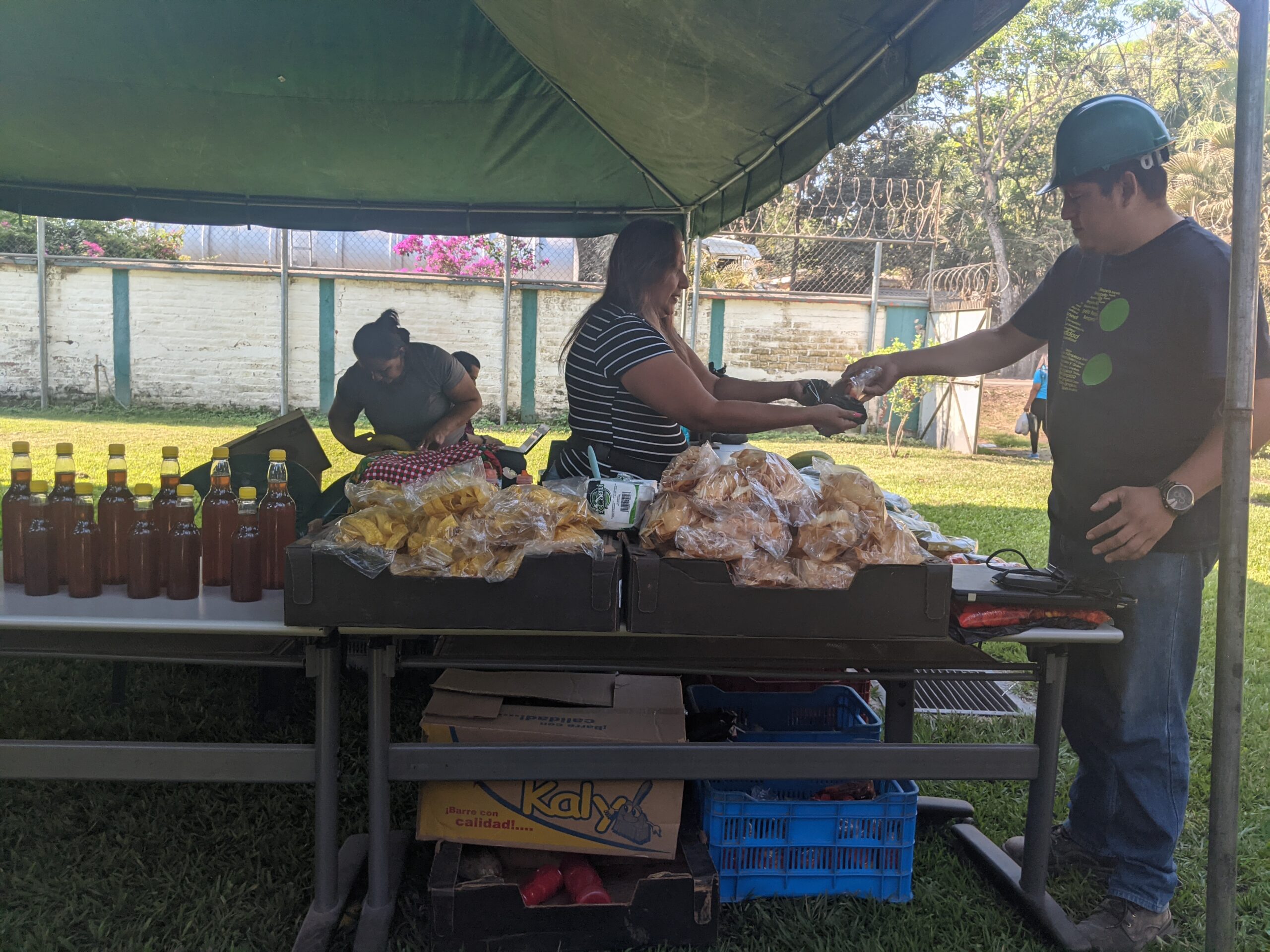
A.1.10. Organization of 3 commercialization and consumption fairs.
A.1.11. Two to three knowledge exchange activities and best practices (one in-person and two virtual).
R2. HEALTH
A.2.1. 4 training workshops with 100 men on new masculinities and co-responsibility in caregiving.
A.2.2. 20 training workshops with 100 women and 25 men on hygiene habits, good manufacturing practices, food preservation, and preparation of nutritious meals.
A.2.3. An educational campaign on healthy, nutritious, and environmentally sustainable food, with a special focus on children and in coordination with the local Health Unit.
A.2.4. Organization of 2 fairs for the consumption of healthy, nutritious, and environmentally sustainable food.
R3. PERSONAL AND COLLECTIVE EMPOWERMENT OF WOMEN, ADVOCACY
A.3.1. 24 training workshops with 100 women on self-esteem, self-awareness, gender, citizen participation, human rights, gender identity, environment, and women’s autonomy.
A.3.2. Development of a women’s leadership diploma program with 25 women.
A.3.3. Formation of 4 women’s community committees.
A.3.4. Review and socialization of the municipal agricultural public policy, with participation and input from representatives of the 4 women’s community committees.
A.3.5. Active participation in 2 municipal accountability activities (expanded assemblies, one per year).
A.3.7. Implementation of a permanent awareness program on women’s rights, through 8 forums.
A.3.8. Creation and broadcasting of radio jingles on women’s rights, including economic rights, organization, participation, and municipal public policies related to food security and sovereignty with an agroecological approach.
A.3.9. Active participation in 3 advocacy activities (International Women’s Day, International Day for the Elimination of Violence Against Women, and Rural Women’s Day).
A.3.10. Socialization of the administrative and legal structure of the El Paisnal district.