Strengthening Food Sovereignty and Envi-ronmental Resilience with Gender Equity and Interculturality among Indigenous Po-pulations of the Chacaya District in the Mu-nicipality of Pocoata
IPTKJustification
The central problem the project seeks to address is the reduction in the availability and access to food, which jeopardizes the food security of rural families and negatively affects the nutritional health of indigenous children and women in the Chacaya district, municipality of Pocoata. Therefore, strategies are proposed and prioritized for the management and conservation of natural resources through environmental resilience practices and protection of water sources, agroecological production aimed at food sovereignty, and the promotion of leadership among indigenous women to strengthen their advocacy with a gender perspective, enabling them to exercise their rights (Right to Food, Right to a Life Free from Violence).
Location
Municipality of Pocoata (Bolivia)
Local partner
IPTK
Objectives
General objective: Contribute to reducing poverty and social exclusion among the rural population and the Indigenous Ayllus of the communities in the Chacaya district, municipality of Pocoata.
Specific objective: Promote food sovereignty with environmental resilience and gender equity for local development and governance in indigenous communities of the Chacaya district in the municipality of Pocoata.
Target population
(125 women and 123 men).
Project duration
Budget
Funding
TAU, Municipalities of Donostia (€53,780) and Irun (€14,114)
Activities:
- Planning activities at the community and family levels for sustainable agricultural, horticultural, and fruit production.
- Agroecological production of crops, vegetables, and fruits, accompanied by soil recovery practices, seed improvement, and cultural practices that recover ancestral knowledge.
- Implementation of solar greenhouses for organic vegetable production.
- Practices for managing and protecting water springs, water recharge management (reforestation), and environmental resilience in the face of climate change.
- Construction of water reservoirs and installation of irrigation systems to optimize water use, with the participation of women.
- Formation of water management committees.
- Training workshops on reservoir maintenance.
- Implementation of water tanks for harvesting.
- Training workshops and practical activities on the management and rearing of laying hens and beekeeping.
- Management and rearing of laying hens and honey production (beekeeping).
- In-person experience exchanges among producers on agroecological production with environmental resilience practices.
- Training workshops and nutritional food practices for indigenous producers within the Food and Nutritional Education Program, with a gender and intercultural approach.
- Implementation of the Food and Nutrition Education Program (PEAN) in primary and secondary education in coordination with teachers and parents, with a gender and co-responsibility approach.
- Construction of improved energy-efficient wood-saving stoves.
- Organization of community and school nutritional fairs.
- Workshops on masculinities and the care economy for men who are husbands/partners of the women participants.
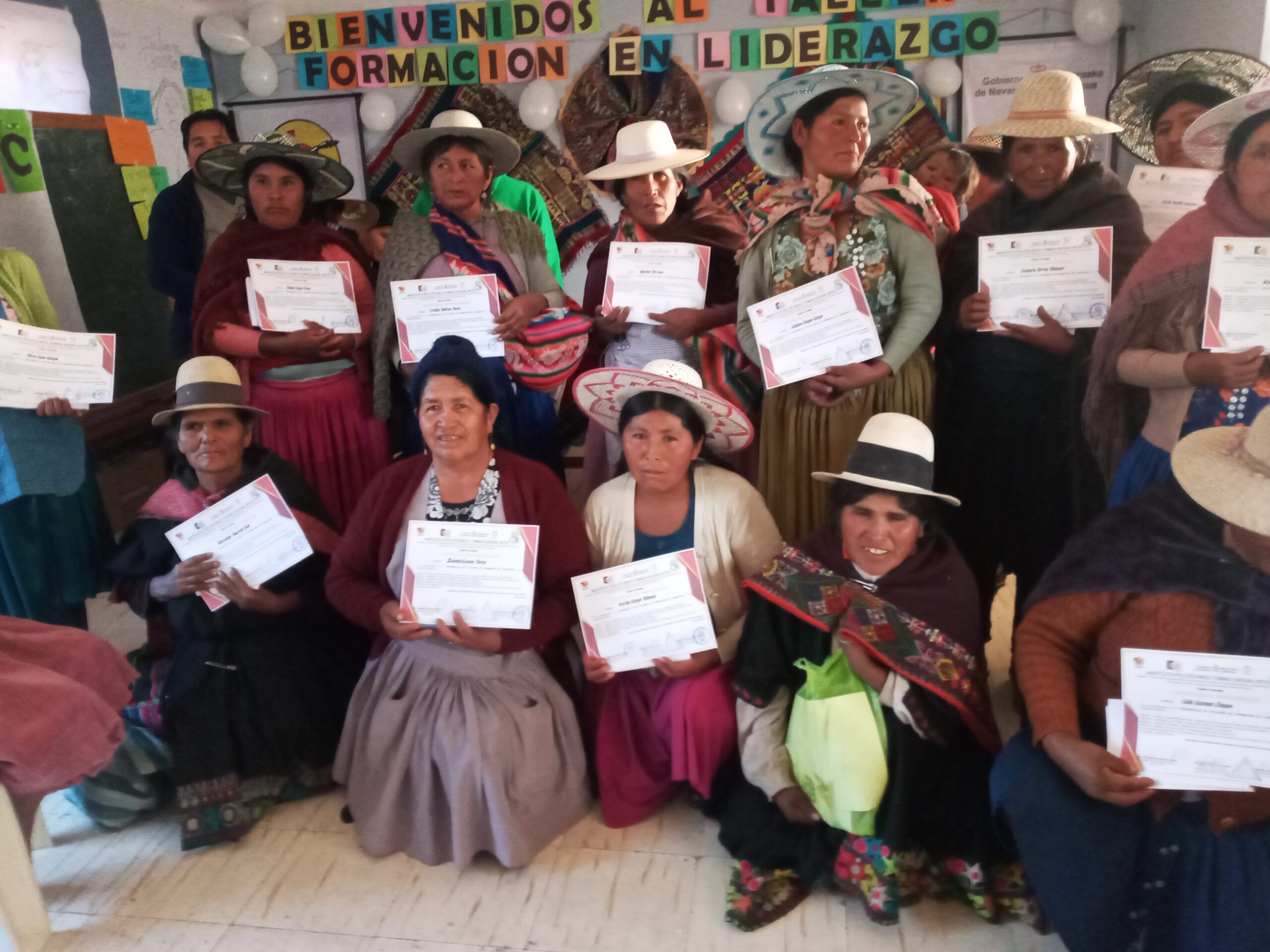
- Leadership-strengthening workshops for indigenous community women leaders, promoting women’s participation.
- Follow-up and support for trained women leaders.
- Workshops for women from indigenous organizations on organizational strengthening, conflict resolution at the organizational level, and proposal development.
- District-level gathering of women leaders to generate proposals aimed at food security and climate change, with a gender and intercultural perspective.
- Participation in mobilizations for the fulfillment of Rights and Obligations related to gender, and the prevention of violence against women.