Strengthening the organizational, participa-tory, and economic capacities of rural wo-men and men in the El Paisnal District, San Salvador Norte Municipality, El Salvador
CORDESJustification
The main problem addressed by the project is the violation of organizational, participatory, advocacy, and economic rights of women in the municipalities of El Paisnal, in the categories of availability, accessibility, acceptability, quality, participation, and sustainability.
Location
El Paisnal
Local partner
CORDES
Objectives
General objective: To contribute to the socio-economic development of the population of San Salvador Norte Municipality by strengthening organizational, productive, and business management capacities, through equitable inclusion and efficient use of the resources available in the municipality.
Specific objective: To strengthen the organizational, participatory, and economic capacities of 200 people (100 women and 100 men), who are part of 4 Community Development Associations (ADESCO) in the district of El Paisnal, ensuring equitable inclusion and efficient use of available resources in the municipality, so that they can become agents of their own development.
Target population
(100 women and 100 men).
Project duration
Budget
Funding
TAU, Bilbao City Council (69.896€)
Activities:
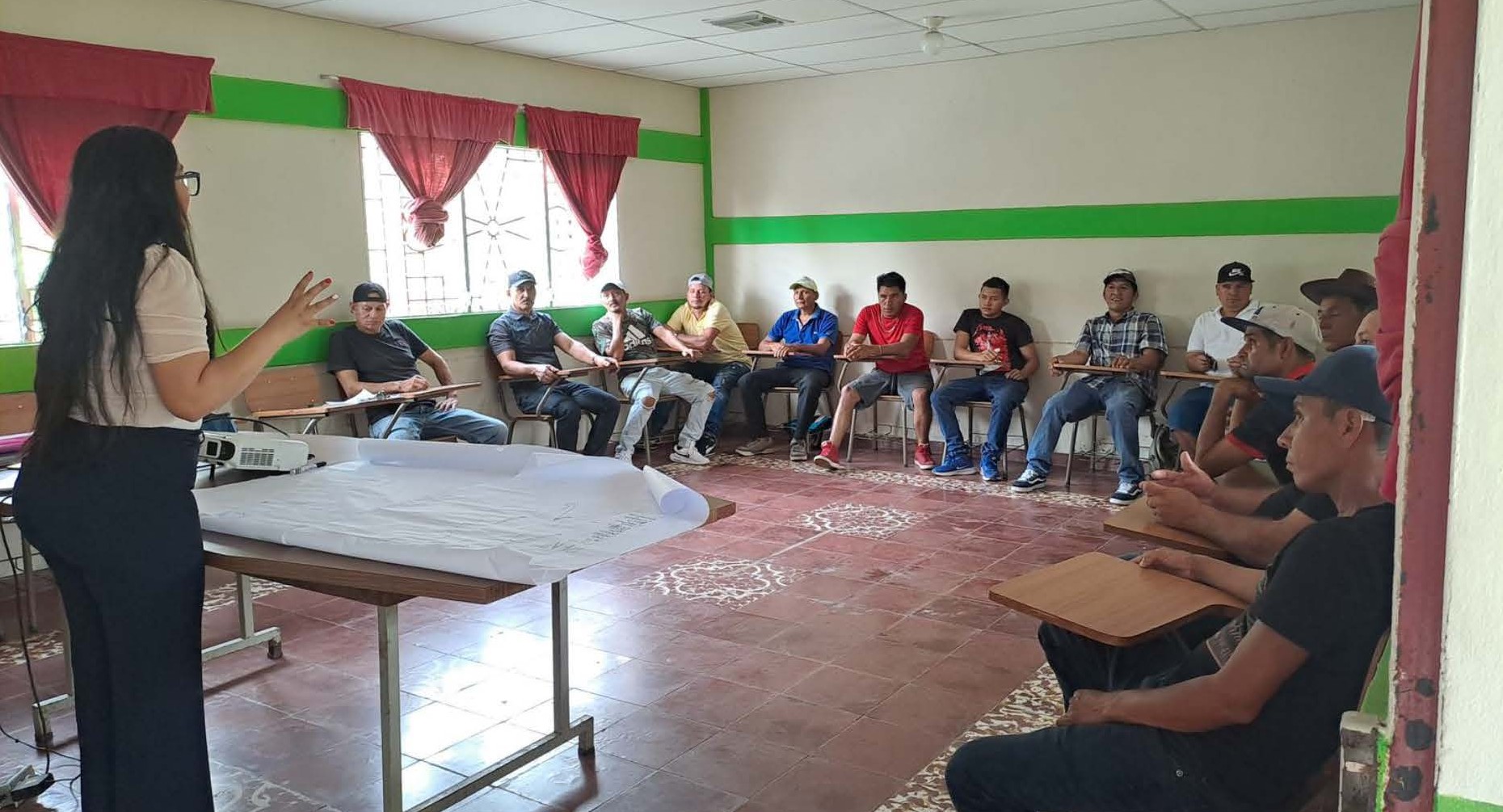
- Develop annual plans for the 4 participating Community Development Associations (ADESCO) and hold review sessions on their structure and functioning.
- Support the implementation of 8 general assemblies of the 4 Community Development Associations and hold monthly reinforcement meetings.
- Update and present 4 demand documents from the Community Development Associations (one per association) to the municipal government.
- Conduct 8 participation and debate activities (forums).
- Carry out 16 advocacy activities.
- Hold 48 training sessions on: Gender/masculinity, Citizen participation, Human rights and gender identity, Food sovereignty, Economy for life, Production of staple grains and organic vegetables, Poultry production, and Environment.
- Organize 2 exchange visits for experience sharing.
- Install 100 diversified family production systems of staple grains, vegetables, and poultry, owned by women, managed with an agroecological and gender equity approach.
- Socialize and analyze two municipal policies (Gender and Agricultural).
- Train 12 public officials (6 women, 6 men) in citizen participation, gender, and human rights.
- Conduct 4 workshops on administrative and legal functioning.